Xian
As I’ve been told, the x in Chinese is pronounced like sh. So Xian sounds like Shian. They seem pretty big on the x here in China, thank you in Chinese is xie xie. Ni hao is hello, and with that I’ve shared all the Chinese I’ve learned so far.
Xian is an ancient Chinese capital and the city where the Silk Road originated. After a ninety minute flight from Beijing on a China Eastern Airlines Airbus A320 with my knees pinned into the back of the seat in front of me, I was in Xian. It’s ninety minute periods like those where I say a silent thank you to the genius at Apple who invented iPods. Close your eyes, put on some Neil Young, and pretend you’re Down by the River. A forty minute bus ride dropped me off within the walls of the Ancient City at the Bell Tower, an intersection of the wisely named North, South, East and West Roads.
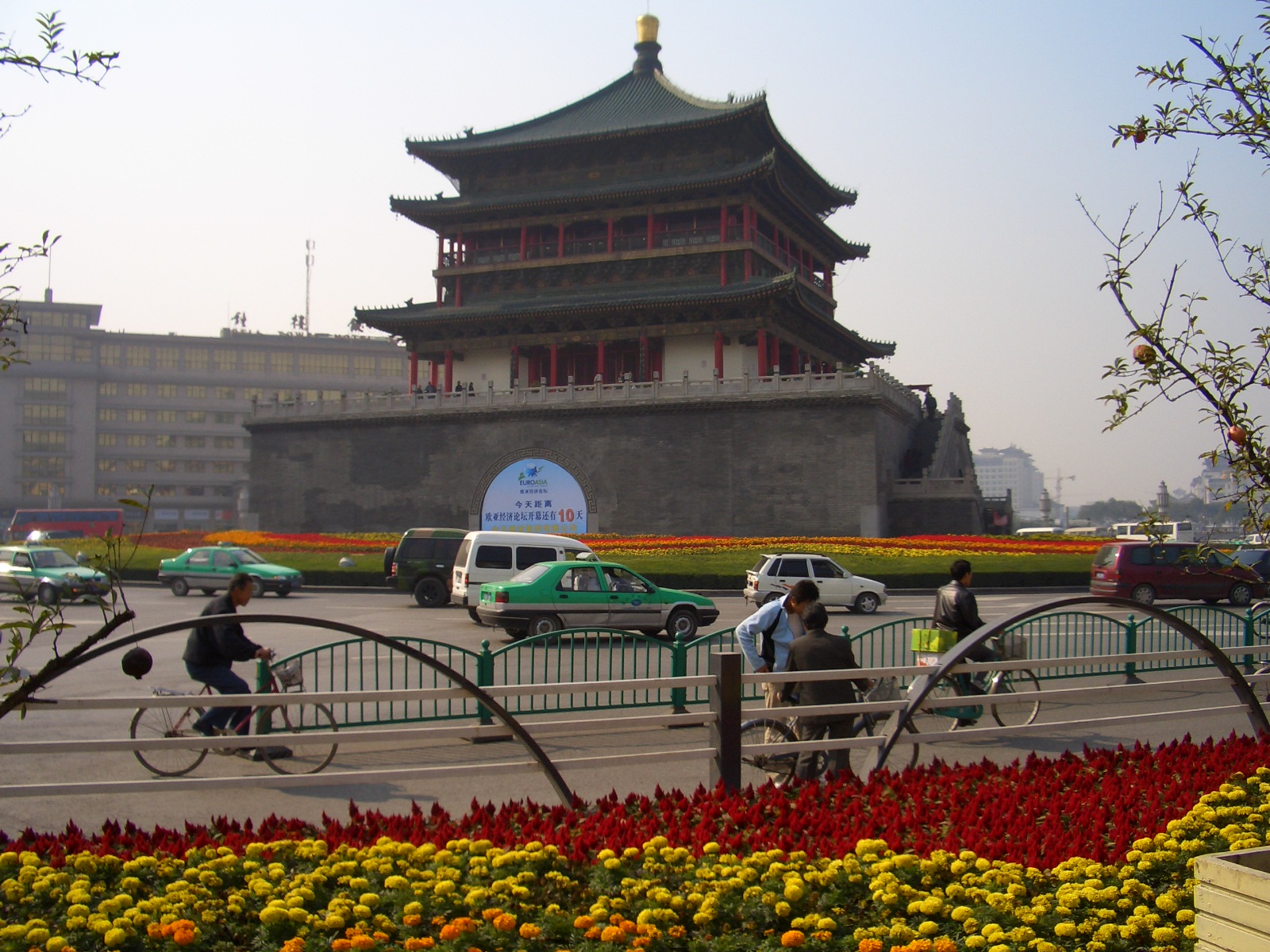
I picked up a nice three star hotel room about one km down the East Road for a tidy $28 a night. Another reason to stay longer in China, this place is very affordable. As I walked that kilometer to the hotel, I realized that the people in Xian could easily crush the Beijingers in a staring contest. They look like they’ve seen a ghost, and apparently that is actually what they call Westerners. Hey jackass, want to see a ghost smack that stare right off your face? Fortunately those thoughts never turned to words. Serenity now, serenity now.
Plenty of public spitters in Xian too.
I spent the first few days in Xian just wondering around within the city walls, including in the Muslim Quarter. The Great Mosque was definitely worth a visit, although I did leave questioning its greatness

What was really great in the Muslim Quarter were the endless alleys of shops and stands serving everything under the sun, most of which I could not even identify. This one didn’t need any explanation
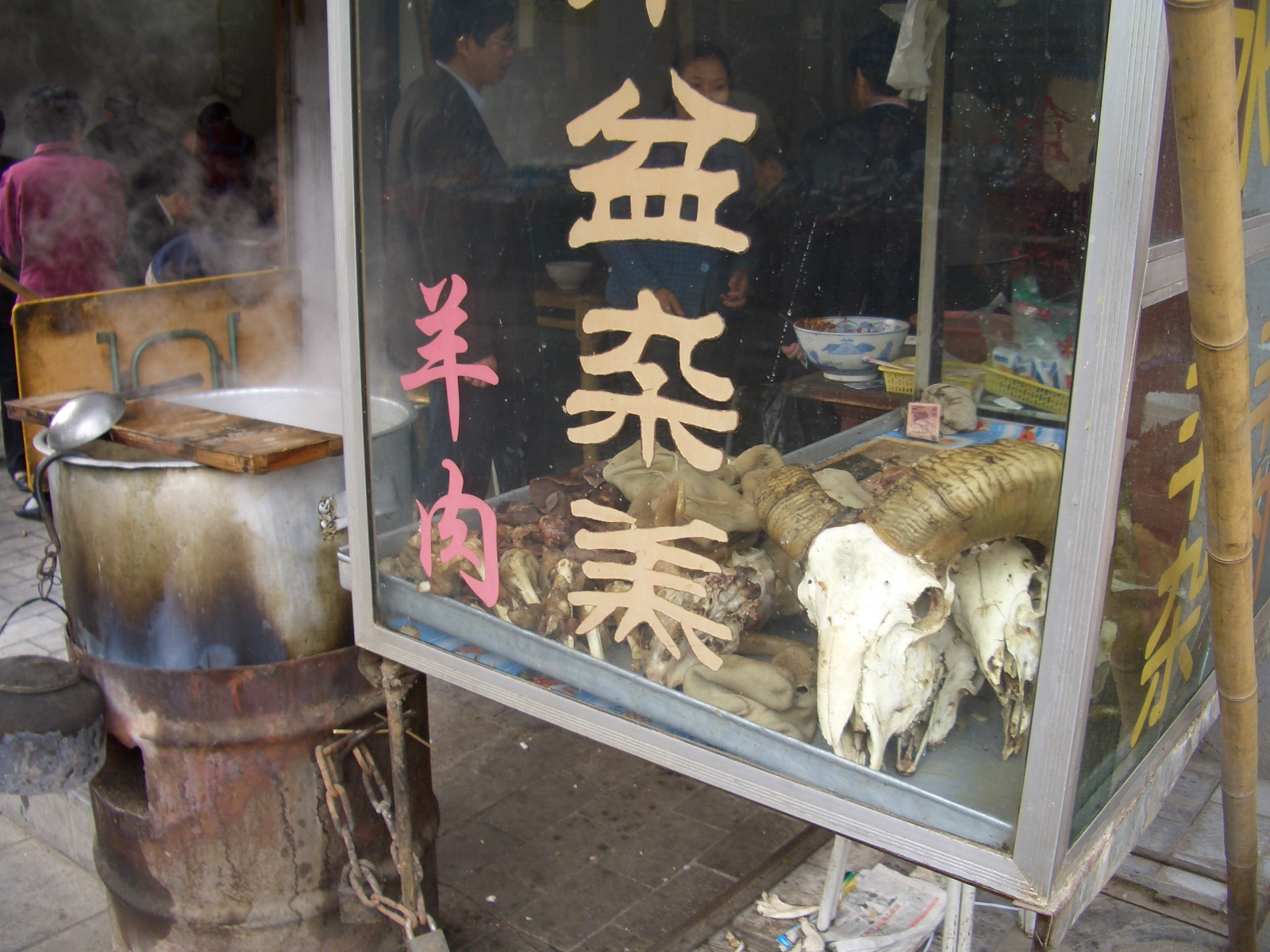
Maybe Mick Jagger visited Xian before coming up with the Goat’s Head Soup album title. I decided to pass on the soup.
I was expecting Xian to be an ancient small city, so was somewhat stunned by the size and how modern it is. Even within the city walls, with the exception of the Muslim Quarter, the city is a modern metropolis. All that really remains are the walls themselves
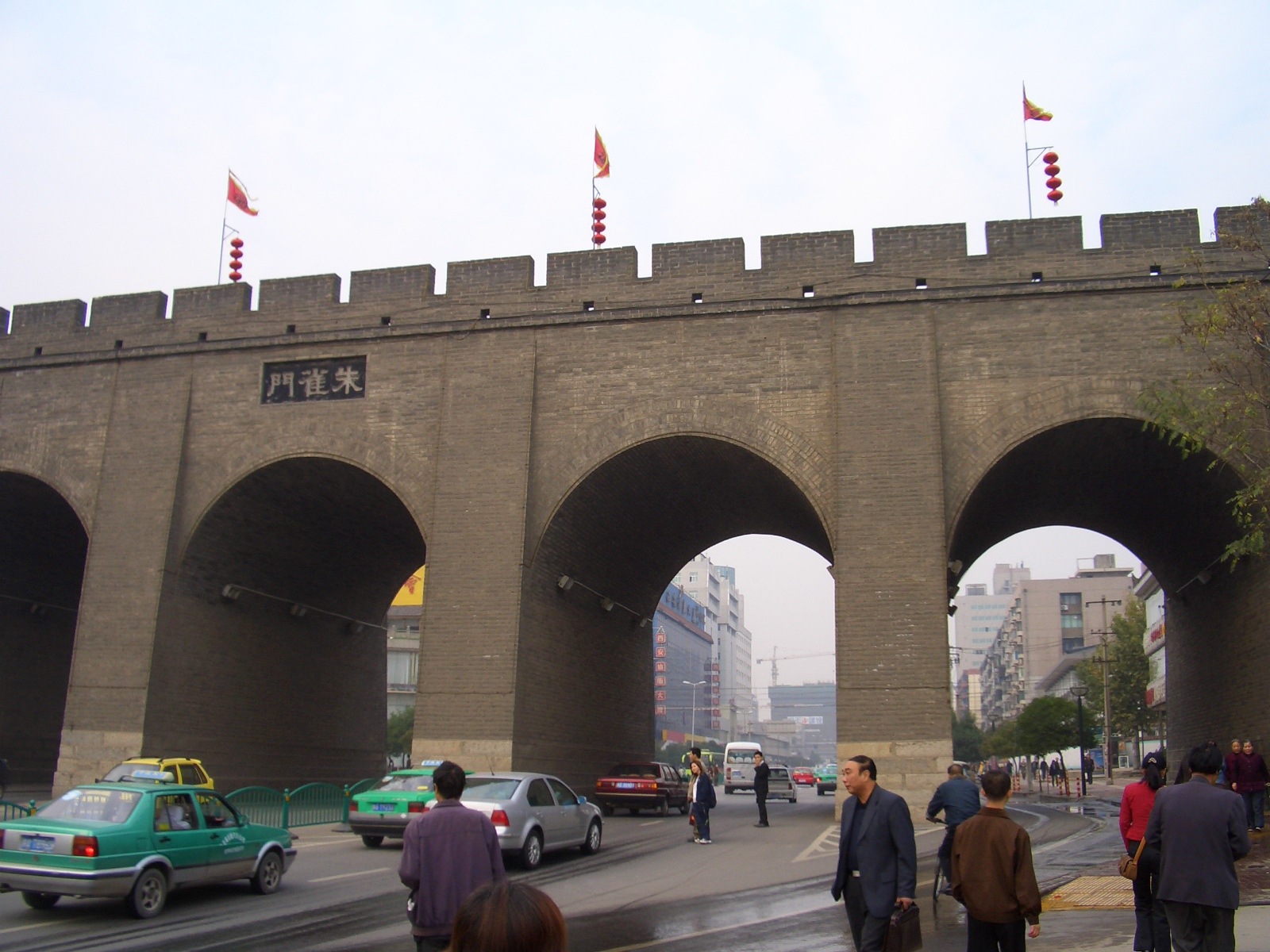
Standing on the wall by the South Gate, modern Xian is everywhere
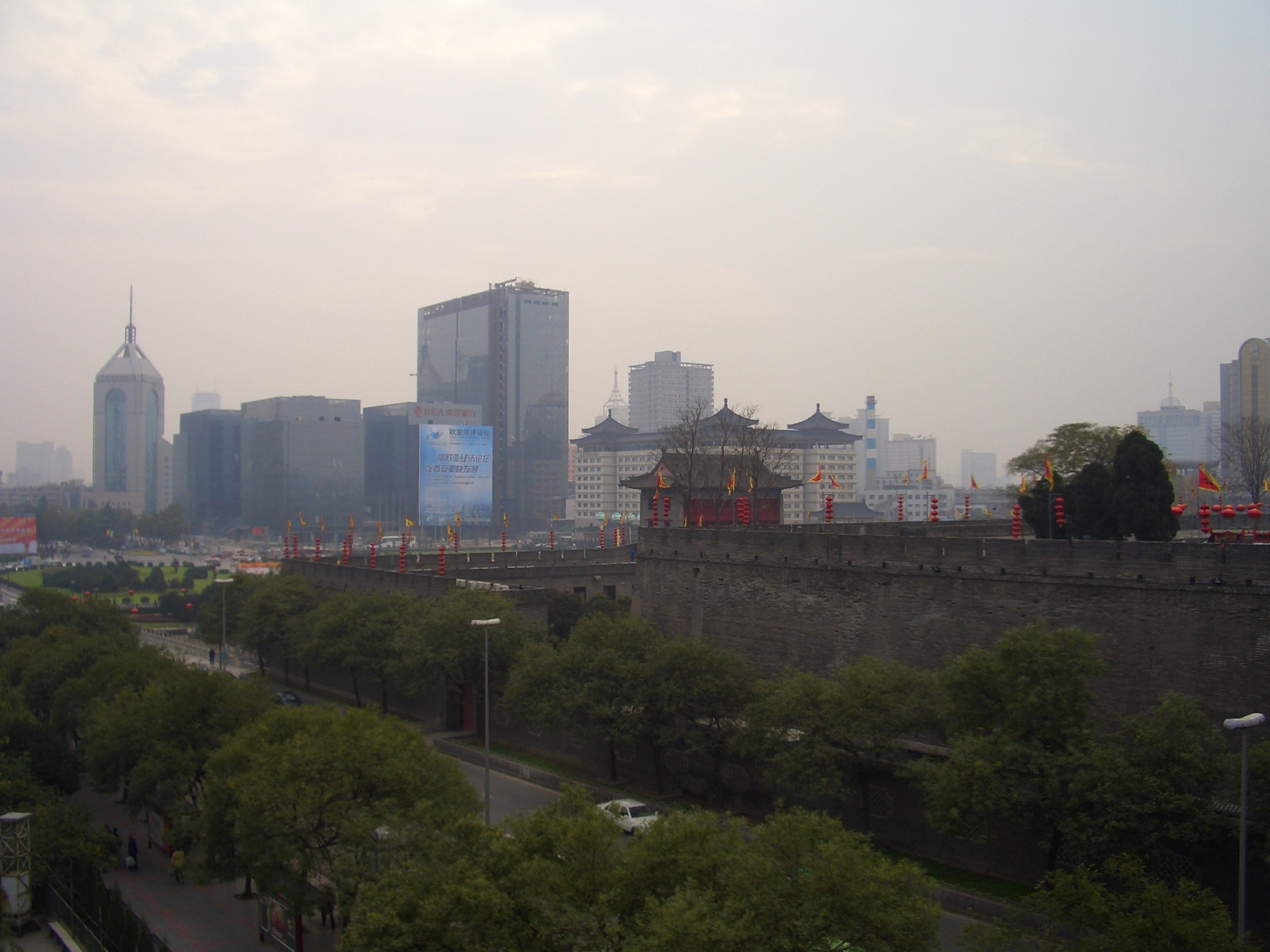
It’s not hard to imagine that eventually both sides will be in the shadow of high rises
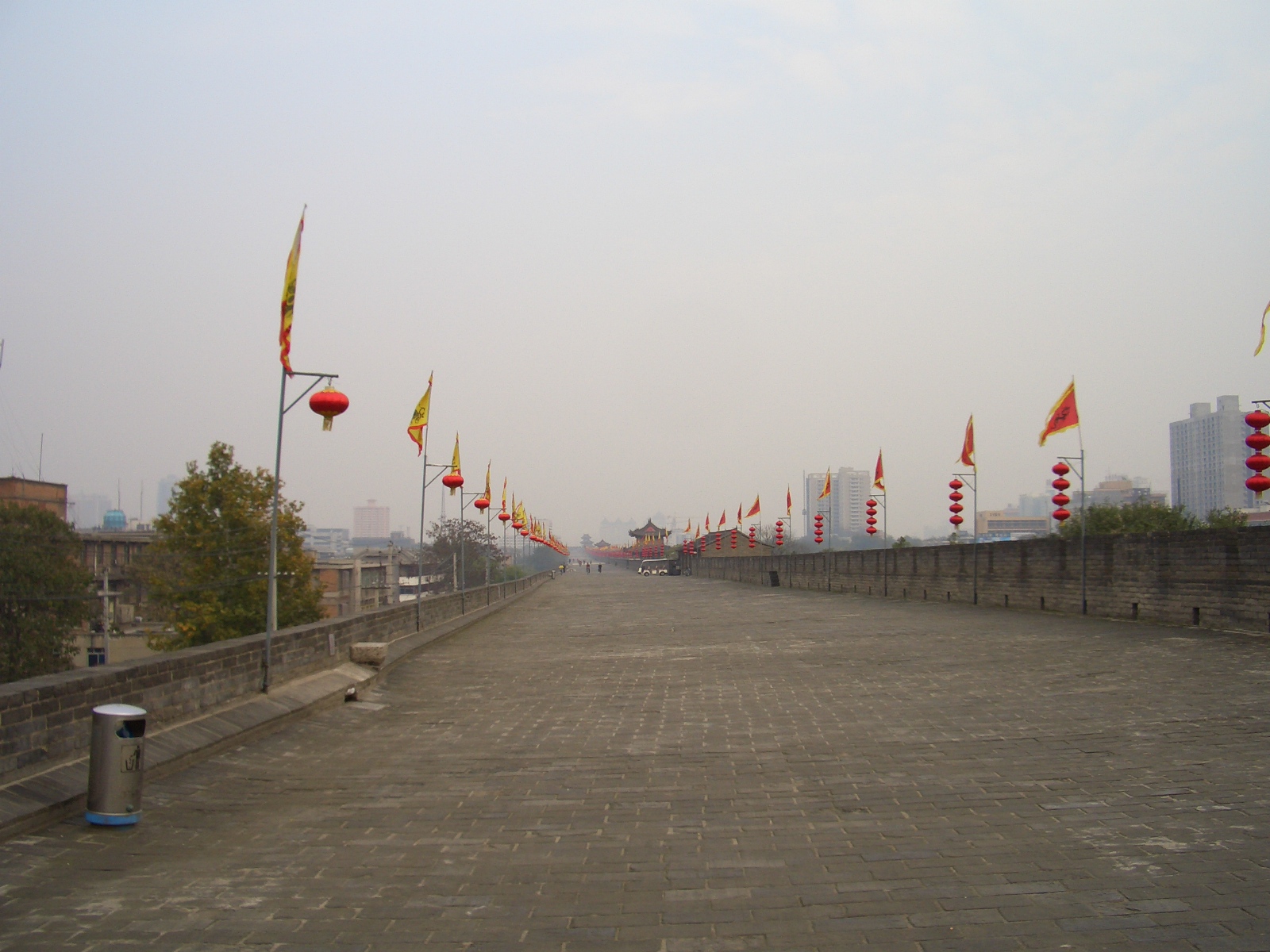
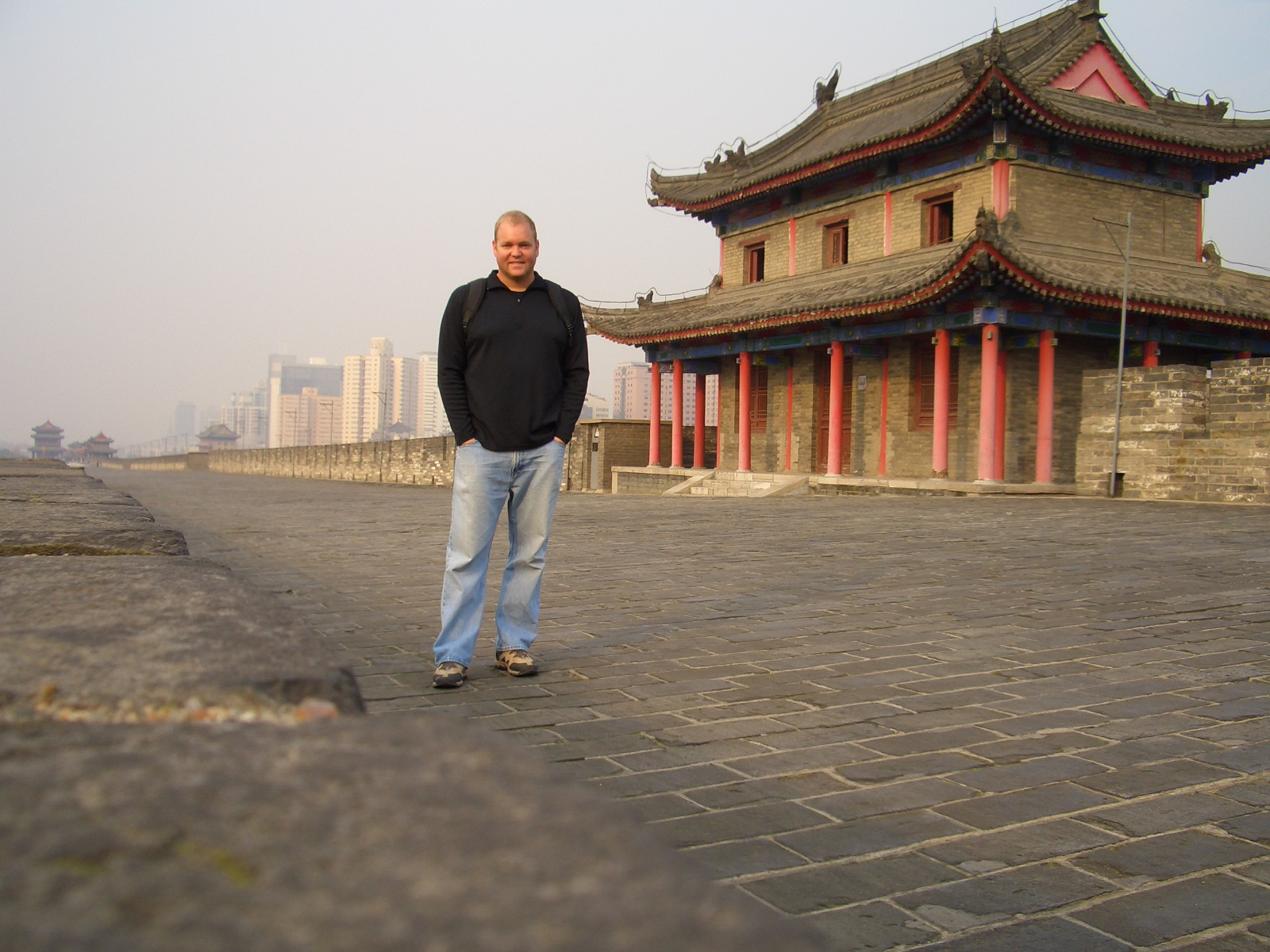
But still, the few hours I spent walking along the wall were probably the most relaxing of any spent within the city. The streets and sidewalks are constantly heaving with traffic and people, it was nice to find some peace just a few stories above all that
On my last full day in Xian, I visited what everybody who comes to Xian must see, the Terracotta Warriors. Here is the history as I understand it: Upon ascending to the throne at the age of 13 in 246 BC, the King of Qin immediately commissioned his people to begin building his tomb. Over the next 38 years, more than one million people, or ten percent of the local population, constructed his tomb. Meanwhile, Qin went on to conquer and then unite China, becoming its first Emperor – Qin Shi Huang. The English pronunciation of Qin is Chin and is thought to be the origin of the word China.
In 1974 a group of peasants outside Xian were digging for a well, and instead of water they stumbled upon the tomb of Qin Shi Huang. It was the further excavation of this site that lead to an extraordinary discovery – thousands of life-size terracotta figures – warriors and horses arranged in battle formations supposedly protecting Qin’s tomb
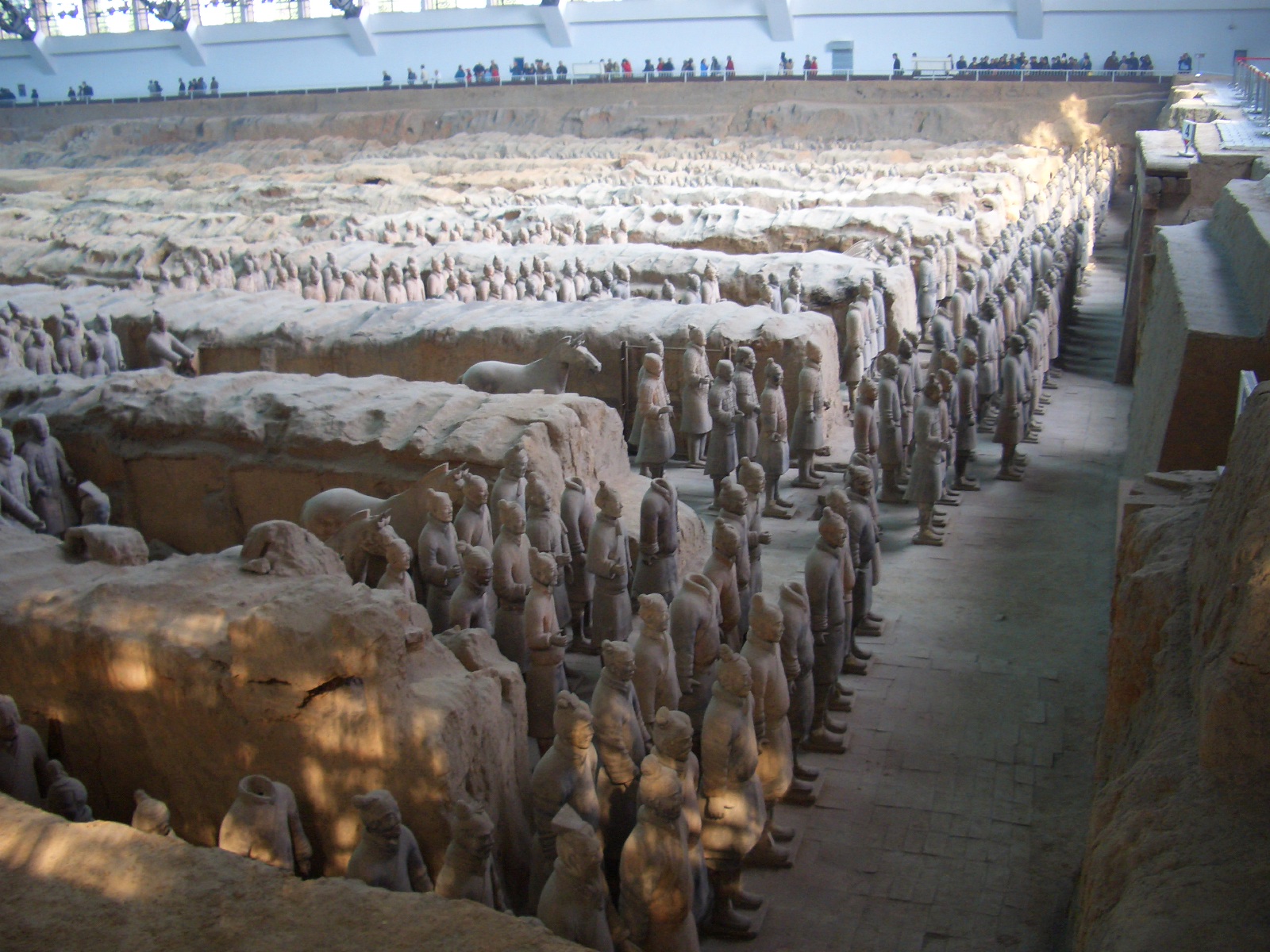
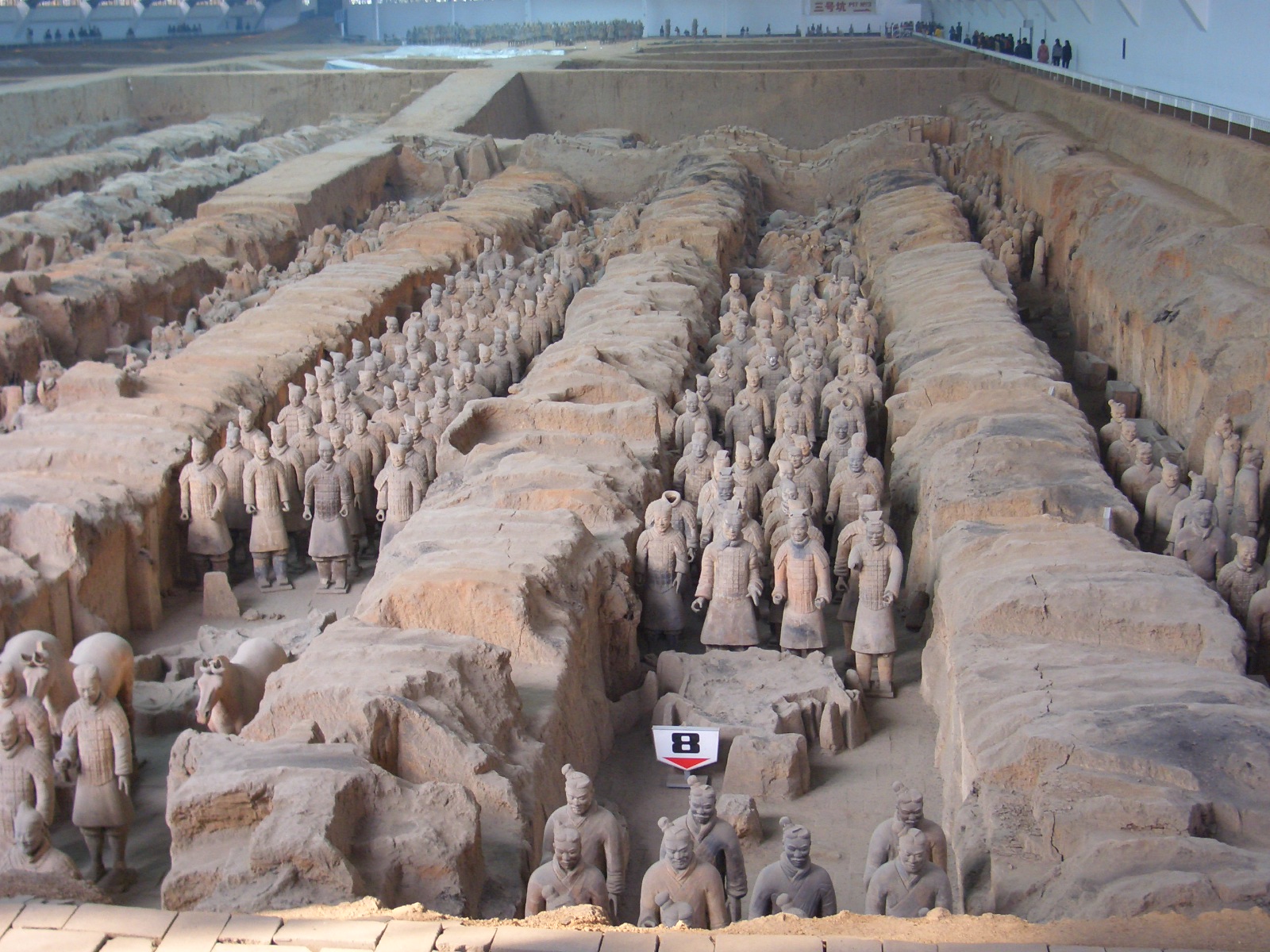
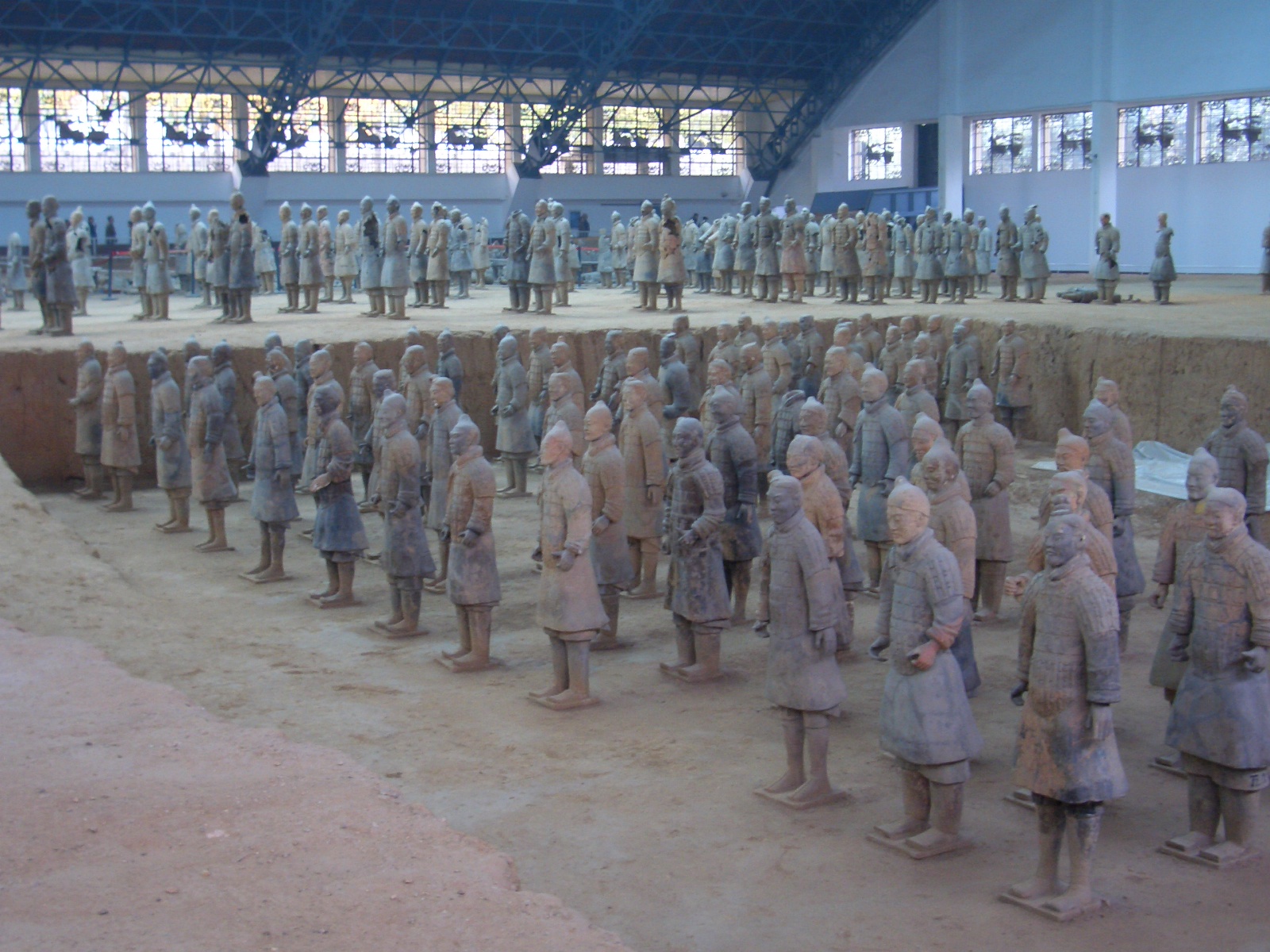
This arch-roofed complex is enormous, seemingly big enough to house an aircraft carrier
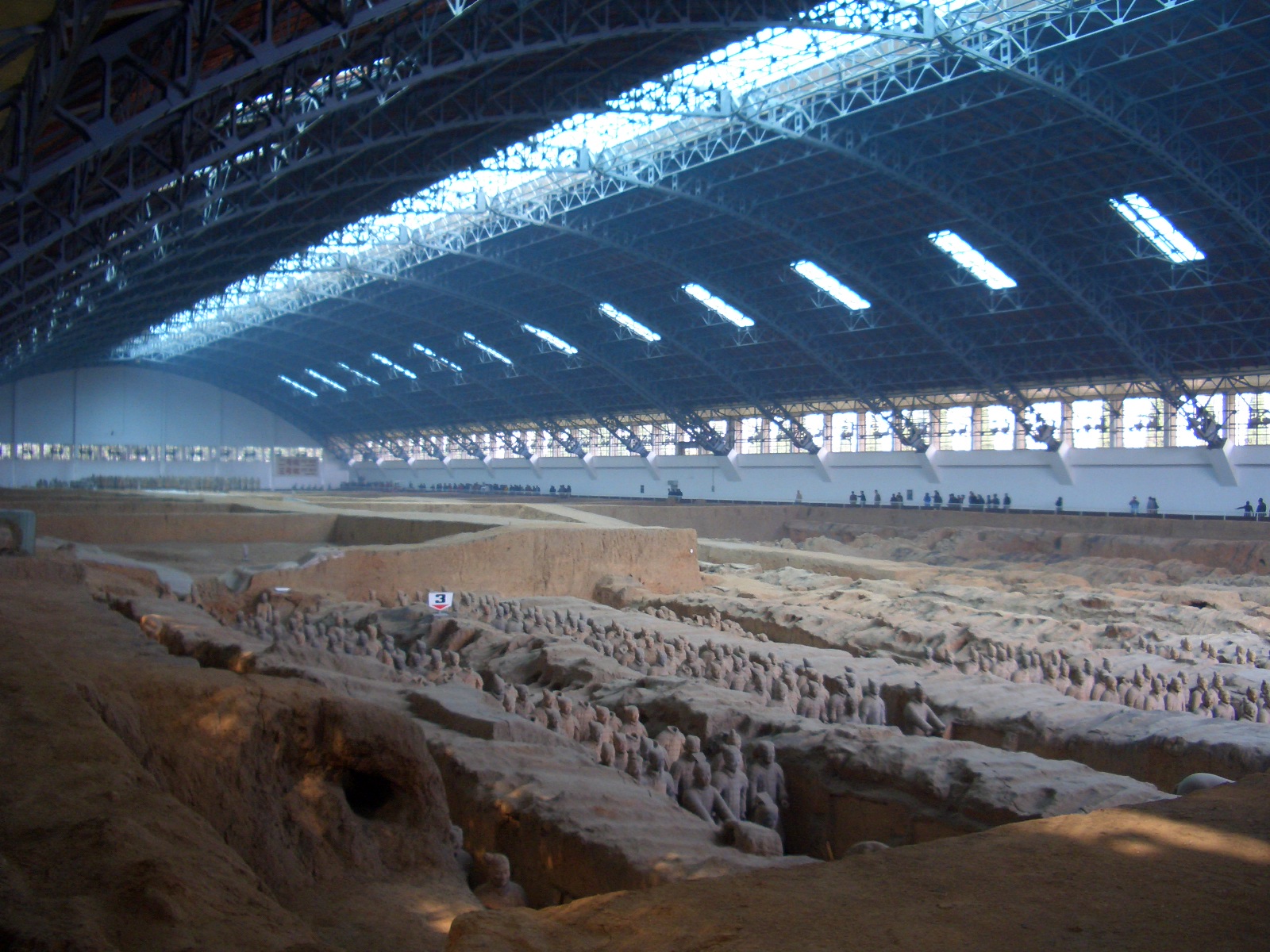
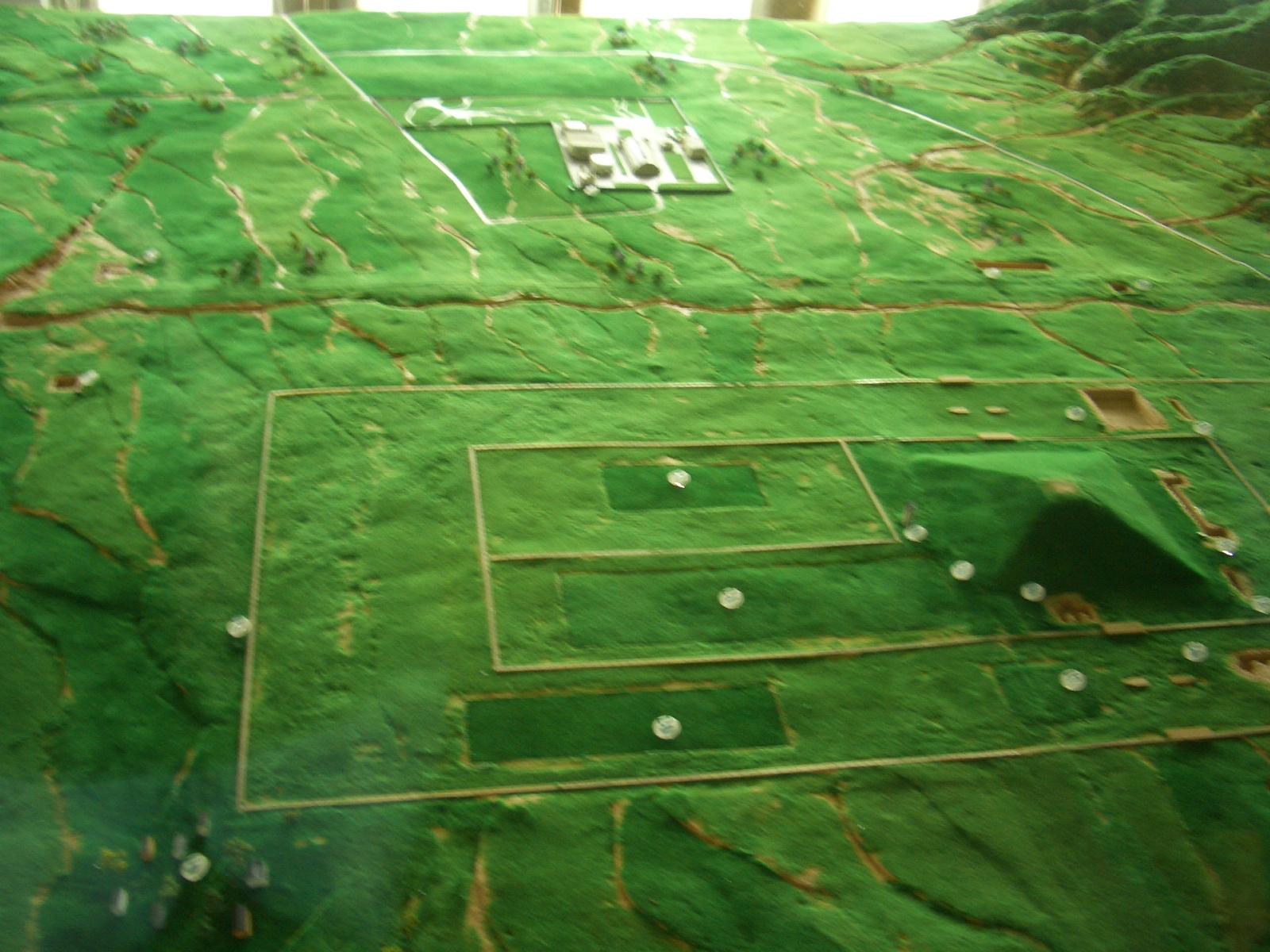
Yet what is truly amazing is that this is just a small part of it. The picture below is of a model of the grounds of the entire burial site. The pyramid-shaped mound in the foreground is where the tomb is thought to be located, and in the background, looking insignificant in comparison, is the massive arch-roofed complex plus a few other museum buildings
Pretty amazing stuff, and the yet to be unearthed tomb could hold even more interesting discoveries. The designers and laborers that built the tomb were all sacrificed and interred with Qin to safeguard the tomb’s secrets. Probably not the finishing bonus they had in mind. Among the speculation about the tomb: Heaven and earth are represented in the tomb’s central chamber. The ceiling, inlaid with pearls, represents the starry heavens. The floor, made of stone, forms a map of the Chinese kingdom; a hundred rivers of mercury flow across it. And all manner of treasure is protected by deadly booby-traps. It’ll be interesting in the years to come to find just what, besides the body of Qin, those Terracotta Warriors are actually protecting.
Ended up on a fifty cent local mini-bus for the one hour trip back to town. Soon we were carrying 30 people in a 20 year old bus made for 15, and some old Chinese guy’s dandruff kept landing on my arm with every pothole we hit. The bus driver was continuously on the horn, overtaking and avoiding head-on collisions only because the oncoming traffic would veer onto the shoulder. It was kind of crazy, but seemingly the norm for China. We passed block after block of deplorable living conditions and questionable sanitary practices. China is sprucing itself up in the places that it expects to be seen during the Olympics, but take a ride away from the highways on a local bus, down dirty pothole filled streets, and you quickly realize that a lot of China still has a long way to go. I actually kind of enjoyed the ride.
After a long shower to get rid of the terracotta dust and the layer of filth that attached itself to me on the bus, my time in Xian was just about over. Time to move on to Shanghai, the ultra-modern Chinese city with a heavy Western influence. My best guess is that means lots of bars.
Leave a comment